History
The life of a Forsyth County country doctor
Generations of Bramblett's have cared for Forsyth county residents.
January 13, 2026 · Heritage Forsyth · 6 min read
This story was originally published in Forsyth County History Stories by Annette Bramblett, wife of Dr. Rupert Harold Bramblett.
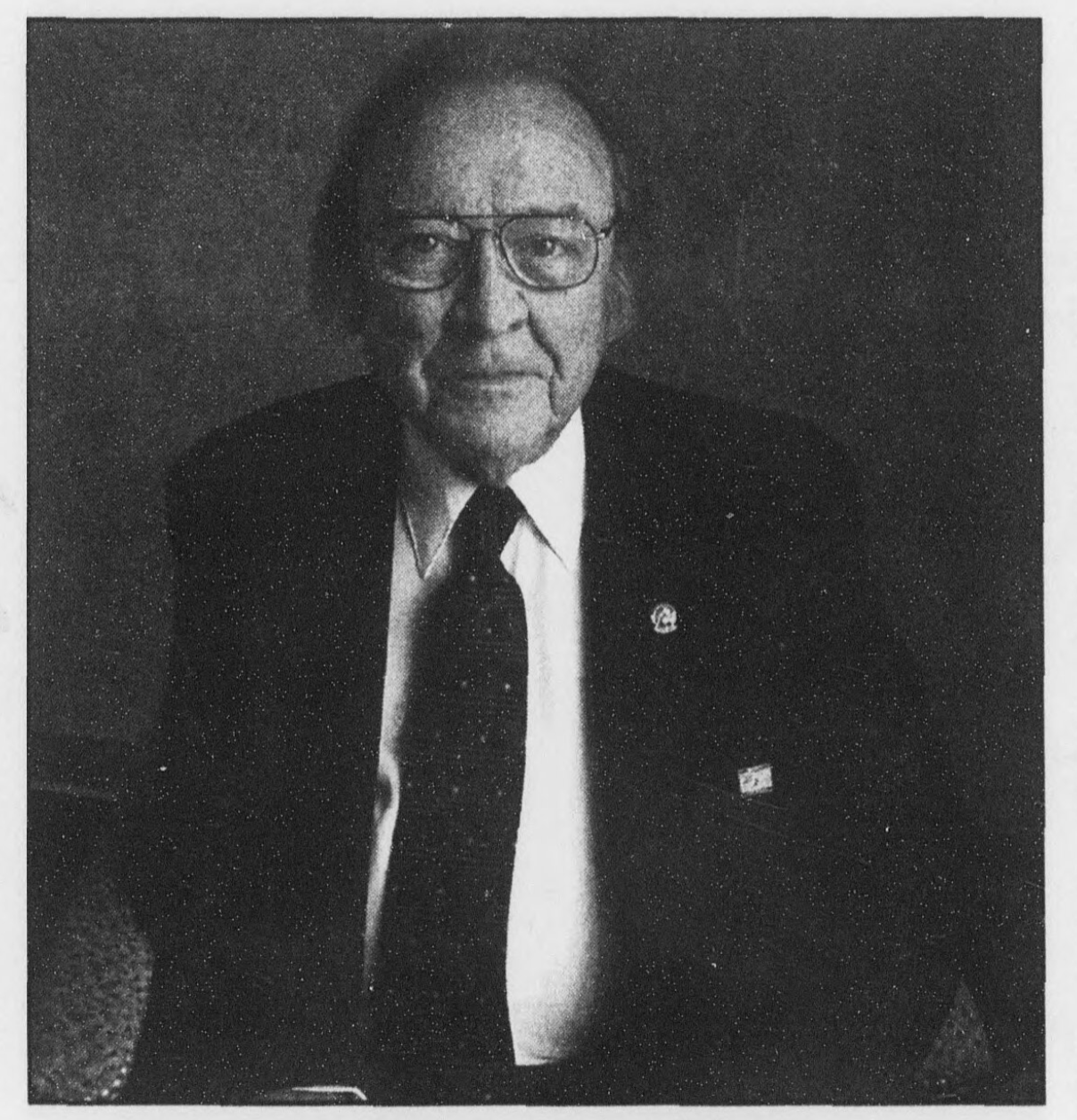
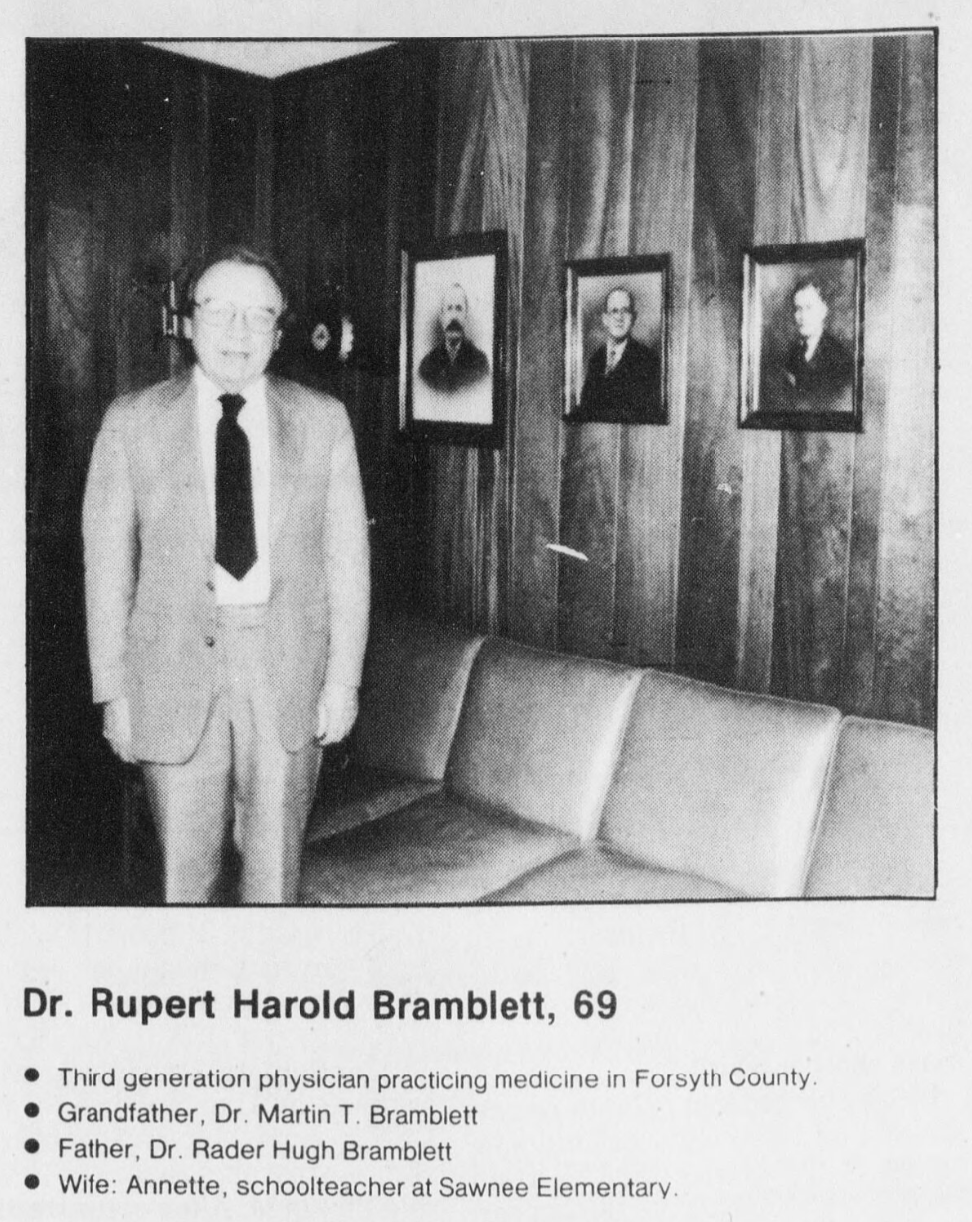
“I am Dr. Rupert Harold Bramblett, a fifth generation resident and third generation physician of Forsyth County, Georgia. Those who live in our thriving, rapidly growing, prosperous county cannot imagine what it was like when I was a child—or for that matter, as late as the mid-20th century. Although my father was a busy physician, practically all of his patients were farmers. In fact, there was nothing else to do in Forsyth County except farm. There was no industry. Nothing else existed here, and, except for the storekeepers-and some of them farmed on the side-payment for anything one did depended upon the farmers. Furthermore, the area was not well-suited for farming, and poverty was widespread. It was even widely accepted.
There was only one native of the community where I grew up who finished high school when I was a child. She [Hannah Holbrook] immediately started teaching in grammar school in a one-room schoolhouse and was my teacher for a few years-actually the best teacher I ever had. In later years, she was my patient until she died a few years ago.
My father and the other doctors in those days did very little office practice. Most of the patients were treated in their homes. The dirt roads and there were no other kind-were rough when dry and in many areas absolutely impassable when it rained. Wooden bridges were carelessly built across the creeks with no elevation of the roadway on either side of the stream and when much rainfall came, the creeks would flood the roads, often times making them totally impassable. On a larger scale, the same thing happened to the rivers.
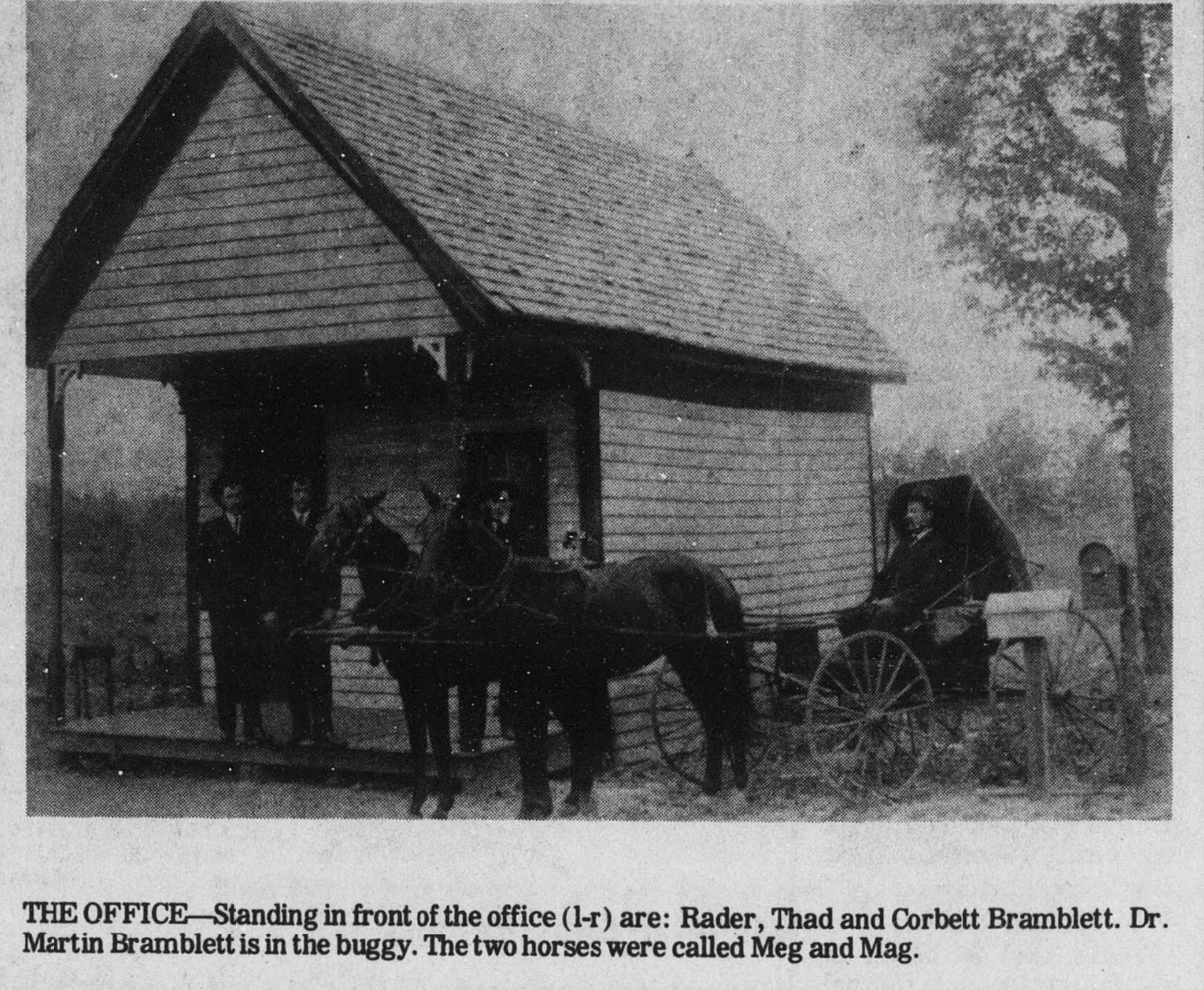
During the winter in the early 1920s, my father's Model T Ford car was in need of repairs and someone had carried him to a home several miles away to an obstetrical patient. As sometimes happened, the patient was in slow labor and he was there all day and all night before completing the delivery. Mother and baby were fine and the man was carrying my dad home. It had rained hard and had turned very cold, and when they came to Settendown Creek one mile from our home, water was across the road on both sides of the bridge and the man would not drive his car into it, afraid that the water would drown the engine, as they used to say, and they would be stranded in the water.
My dad was worried because he knew that there was little firewood at our house when he left, expecting to be back home in several hours, and his fears were well-founded. My mother, at home with two children, this one very small, used up all the available firewood, and when she asked her brother-in-law who lived next door to cut some wood for her, he told her it was too cold to get out and cut firewood, to move into their house. This she thought she could not do. The local telephone lines all converged at our home, and she was afraid to leave them unattended. Someone needing to know where to find the doctor would be calling there.
Well, it was a bad situation. When the man would not drive into the freezing water, my dad removed his shoes and socks and waded through it, breaking the skim of ice on top as he waded into the water, and the skim of ice on top as he waded out on the other side. The weather was so cold that after he put his socks and shoes on and started up the road, he could hardly walk. By the time he climbed the hill and ran into the first house where a neighbor lived about a half a mile from our house, he knelt by the open fire and cried as his almost frozen feet began to very painfully regain circulation.
When he reached home, my mother told him that she was sorry but she had found it absolutely necessary to burn some old furniture-an old wooden bedstead from the back room to keep a little warmth in the house. My dad said, 'That's all right, honey. If it ever happens again, you can pull the siding off of the house and burn the weatherboarding. Just be careful to start first on the side away from the wind, and maybe I'll get home before you get around the corner." My dad's fee for that delivery was $5.00, and of course he may not have ever been paid anything.
Even by the time I started the practice of medicine in Forsyth County in 1945, there was only one paved road in the county-Highway 9, going from Atlanta through Cumming and on to Dahlonega. Although we did have some improved, so-called gravel roads, many were not and even the gravel roads broke down when prolonged winter rains occurred. I made house calls almost daily, starting in the early afternoon after a full morning's work in the office and it was often far into the night-sometimes after midnight-before I returned home. It was not unusual to visit the sick in 20 or 25 homes, located in two or even three counties, and, in bad weather, I might have to find someone with a team of mules-rarely a tractor-to pull my car out of mud holes two or three times in one day and night.
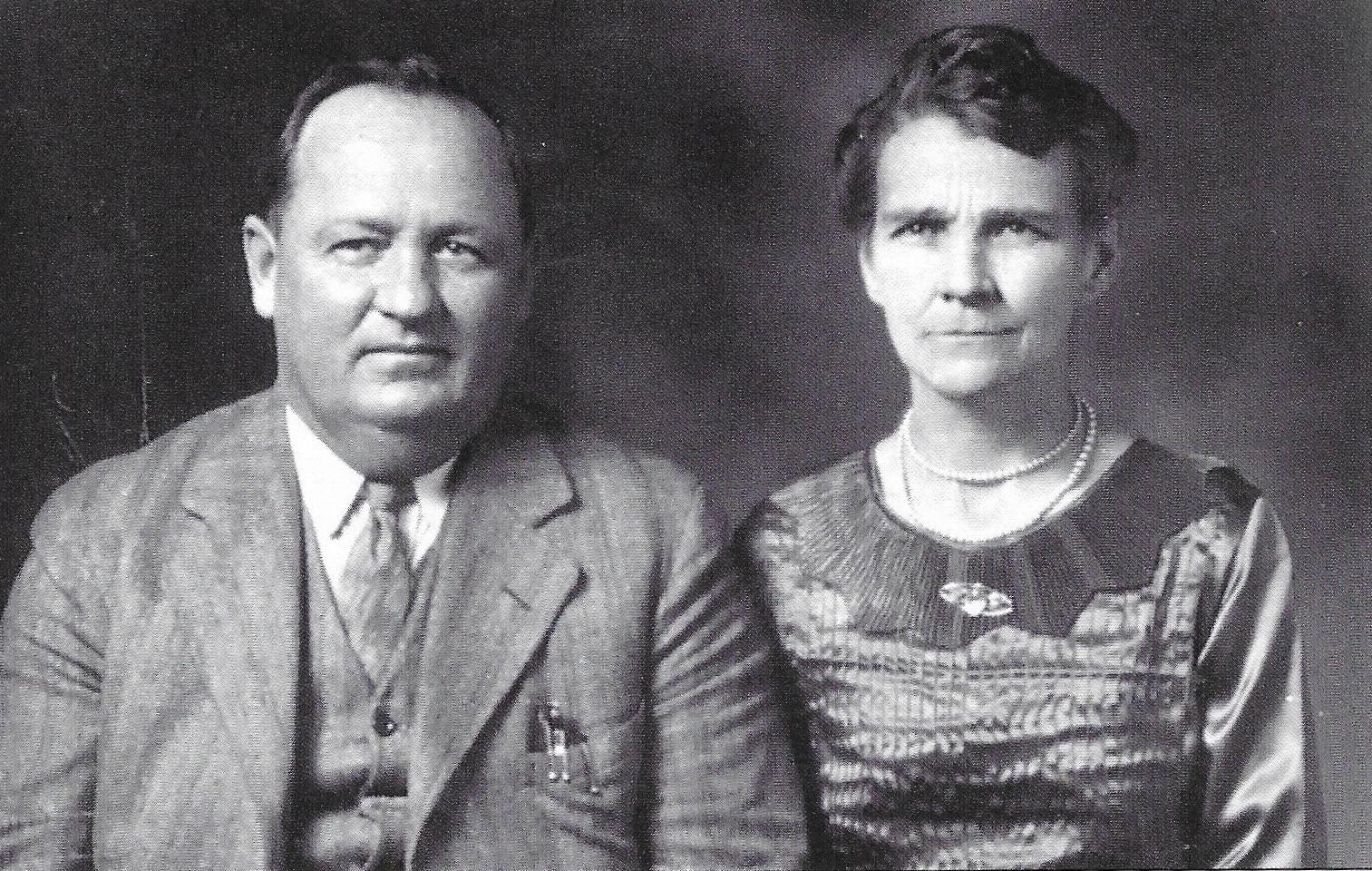
An interesting event occurred after my dad was older and the roads were better and he worked in his office until noon, as I did when I started my practice in the county, then ate lunch and started visiting patients' homes. This was in 1943 while I was still in medical school, my father was called on an emergency just as he was about to leave on his round of house calls. Two young men, one of them AWOL from the Marines, had fatally wounded and robbed a storekeeper [Ben Roper] about three miles from our home, and while Dad was working with the patient before sending him to the hospital in Atlanta, two young men came to my parents home and asked Mother to see my father. She told them he wasn't there—he had gone on an emergency call. Well, they waited around in the yard near his office until my dad returned, and he just paused briefly to see if there were any added calls that he had to make before going on the round that he had already promised.
One of the men told Dad that he needed to get medicine for his sick baby. Ordinarily my father would have opened his office and gotten the medicine for him, but fortunately he felt compelled to get started on his previously promised home visits. Delayed because of the emergency call he had made, he probably told the young man to come back later that afternoon and then rushed off to visit sick people in their homes. It was learned later that the two young men were the very same two who had robbed and fatally wounded the storekeeper, and their victim died a few days later in an Atlanta hospital. After they were captured, one of them told the authorities that their plan had been to get my father into his office, overpower or kill him, and use his car for their getaway.
Well, my granddaddy, my daddy, and I all were doctors in this county, starting in the spring of 1885. ... And we were all dedicated to service for the people who trusted us, always doing our best for them, whether they paid us or not in the days before Medicare and Medicaid, insurance payers, HMOs and the whole conglomeration. Along with other doctors of the time, we were privileged to know that we were held in high esteem.”
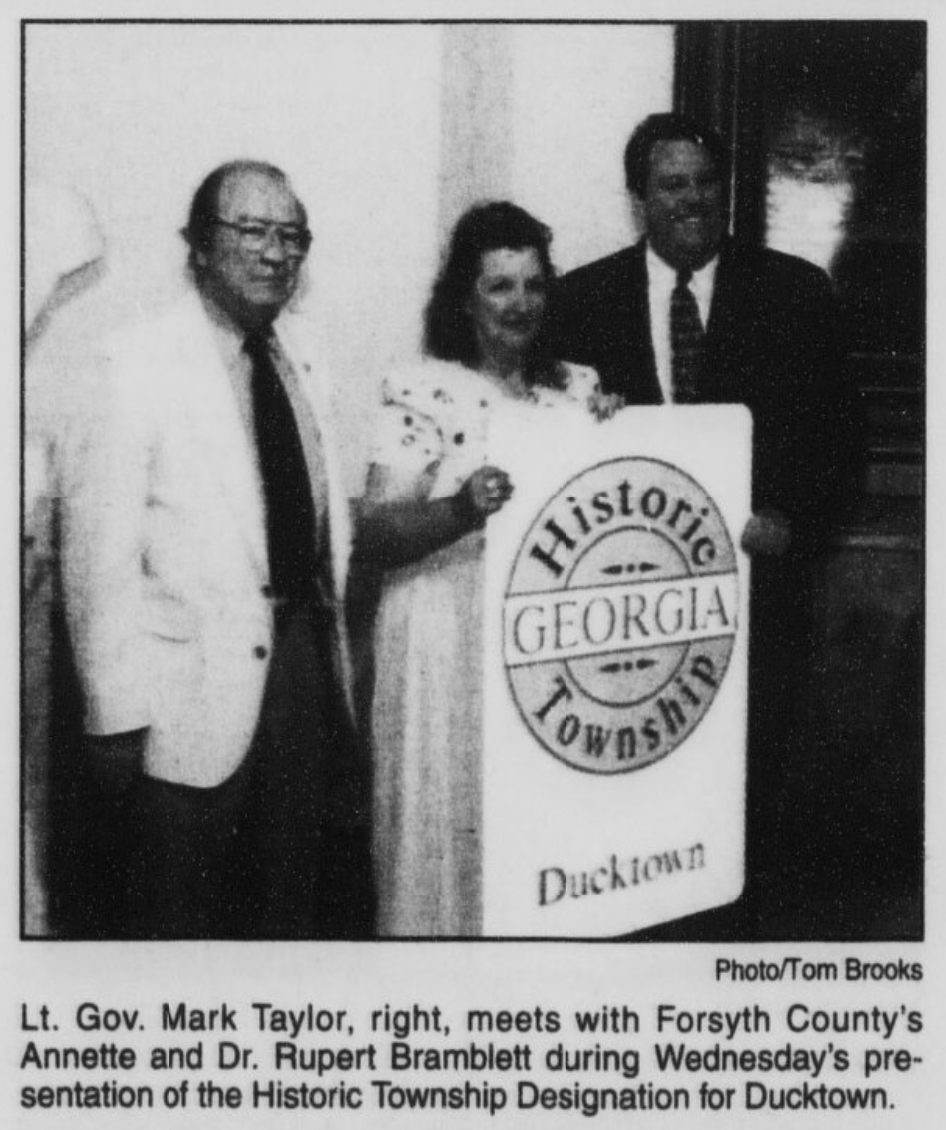
Dr. Bramblett Road in north Forsyth is named after Dr. Rader Hugh Bramblett.
Related Stories
History
Almon C. Hill: The educator who helped shape modern Forsyth CountyCoach, superintendent, school board member, and one of the most influential education leaders in Forsyth County history.
January 2, 2026 · Heritage Forsyth · 3 min read
History
History of Keith BridgeFrom Keith's Ferry to a covered bridge later swallowed by Lake Lanier, this crossing linked Forsyth and Hall for generations.
December 17, 2025 · Heritage Forsyth · 2 min read

Civics
Commissioner Kerry Hill: No tax increase?Kerry Hill said she never voted for a tax increase. What does her voting record say?
March 21, 2026 · Heritage Forsyth · 5 min read